

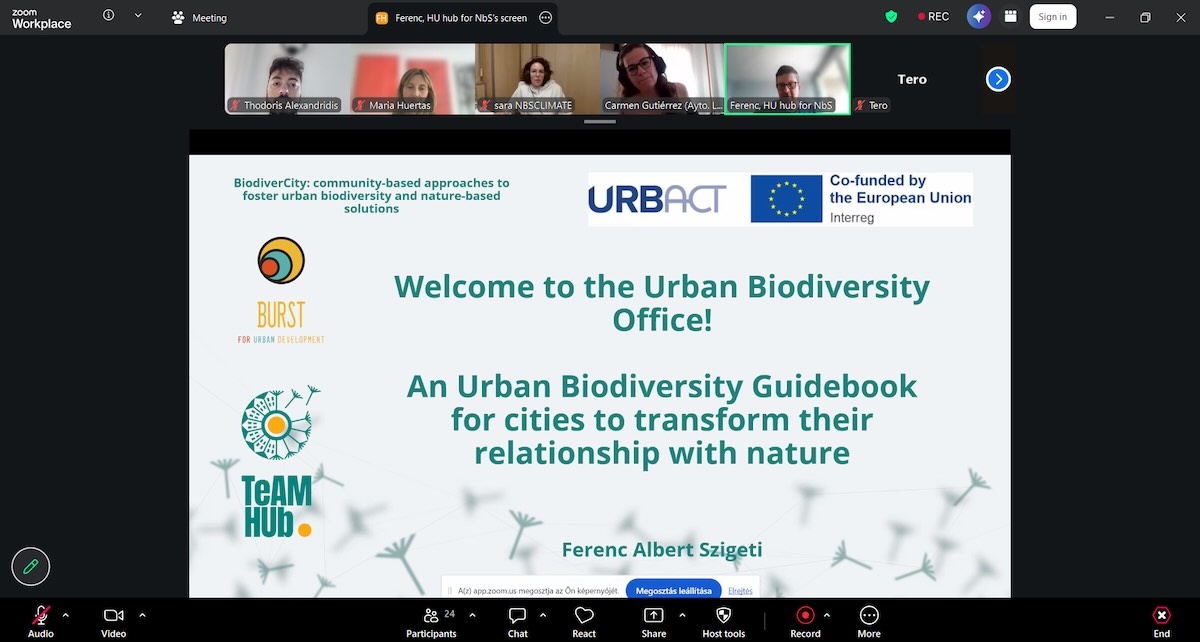
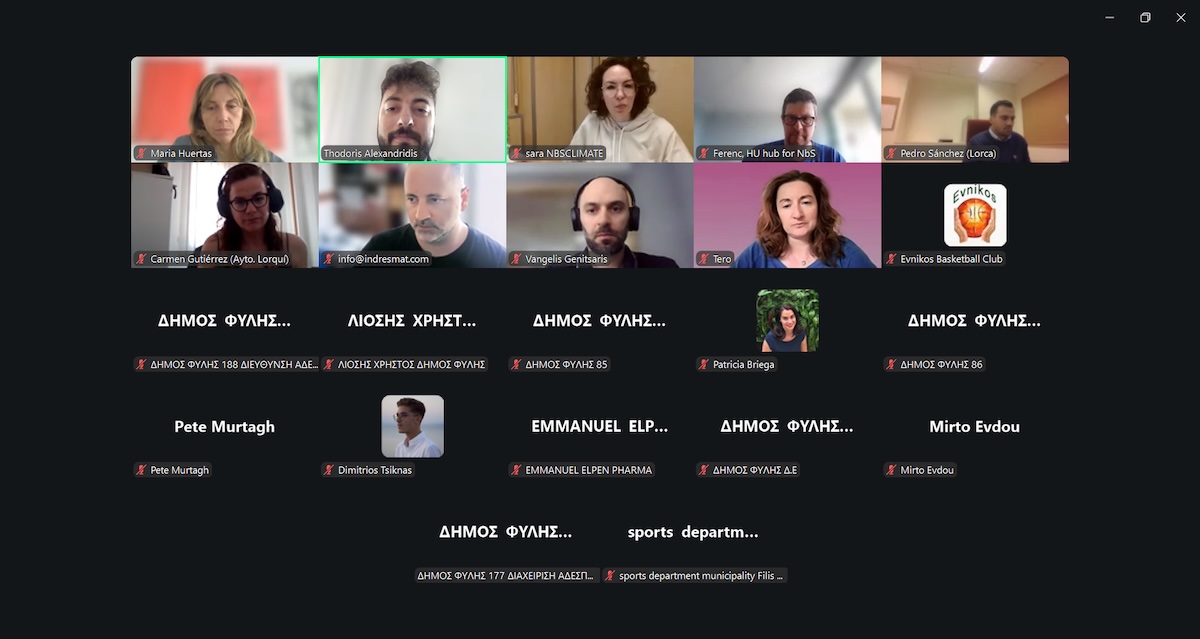
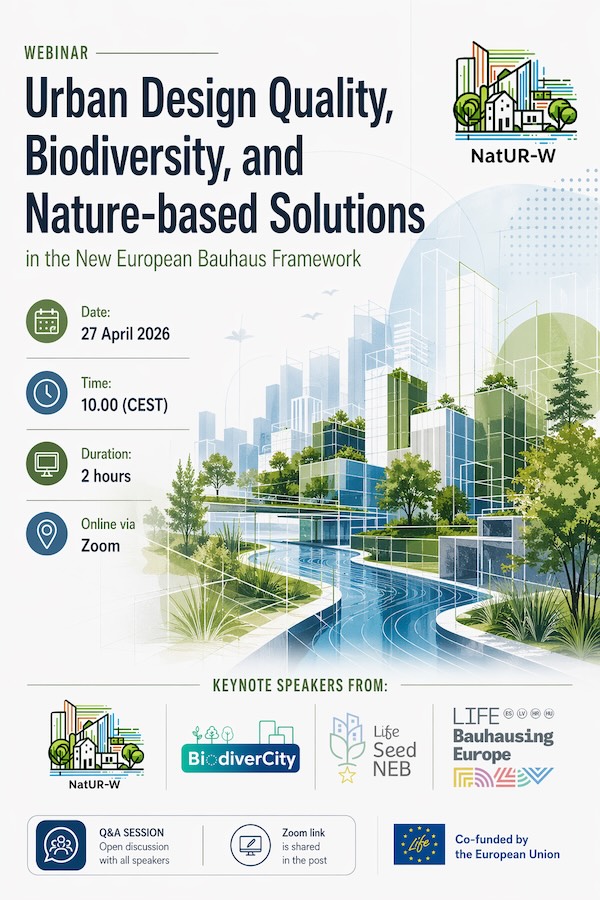
On 27 April 2026, the NatUR-W project successfully hosted the webinar “Urban Design Quality, Biodiversity, and Nature-based Solutions in the New European Bauhaus Framework”, bringing together experts, practitioners, and representatives from several European initiatives committed to advancing sustainable urban development.
The webinar explored how cities can become greener, more inclusive, and resilient by integrating high-quality urban design, biodiversity enhancement, and nature-based solutions into local planning and regeneration processes. The event fostered knowledge exchange among complementary European projects and networks, highlighting practical approaches that support the objectives of the New European Bauhaus.
Participants had the opportunity to learn from the experiences and achievements of several initiatives, including NatUR-W (European Urban Initiative), SeedNEB (LIFE Programme), Bauhausing Europe (LIFE Programme), and the URBACT BiodiverCity Network, which presented its Urban Biodiversity Guidebook as a practical resource for cities seeking to strengthen urban biodiversity.
Among the main topics presented during the webinar were:
- The regeneration of Lorca’s Barrios Altos through the implementation of natural water cycle management, energy efficiency measures, and socially inclusive urban interventions under the NatUR-W project.
- Innovative actions to enhance urban biodiversity, including citizen science initiatives, insect hotels, and participatory community activities developed within NatUR-W.
- Ecological transition strategies promoted by the LIFE Bauhausing Europe project, focusing on public building renovation, circular districts, and sustainable urban transformation.
- Nature-based solutions and community co-creation approaches implemented by the LIFE SeedNEB project to improve public spaces and strengthen local engagement.
- The Urban Biodiversity Guidebook developed by the URBACT BiodiverCity Network, providing practical guidance and tools to support municipalities in integrating biodiversity into urban planning and policy.
The webinar demonstrated the importance of collaboration across European initiatives in addressing common urban challenges and promoting innovative, people-centred solutions. By sharing knowledge, experiences, and practical tools, the participating projects reinforced the role of nature-based solutions as key drivers of climate resilience, biodiversity protection, and sustainable urban regeneration.
NatUR-W remains committed to fostering dialogue and collaboration among cities, stakeholders, and European projects, contributing to the development of healthier, more resilient, and more liveable urban environments.