

The NatUR-W project has reached an important milestone with the start of construction works in Lorca’s Barrios Altos district. Work is now underway on two of the project’s flagship actions: the creation of a new urban forest and the restoration of the old jail building and its surrounding area.
The new urban forest will transform an abandoned and dry site into a new green public space. Designed to improve climate resilience and quality of life for local residents, the area will also help reduce the risk of flash-floods. The project integrates nature-based solutions and sustainable water management systems, including rainwater reuse, creating a self-sufficient green space that will regulate the local microclimate and provide a place for social interaction.
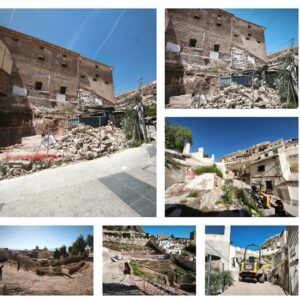
Construction works have already begun, with excavation works shaping the future layout of the park. During these initial excavations, archaeological remains were discovered in two locations within the site, including sections of walls, dating back to the Islamic period of Southern Spain, adding an important cultural dimension to the project.
A new entrance – the third one – has now opened on the eastern side of the park, providing access from the lowest point of the park and improving its connection with the old jail building. This new access point will make it easier for residents to move through the area and update the connectivity of the neighborhood. Until now, this part of Barrios Altos has been separated by this urban gap that limited accessibility. The project will not only improve the area’s resilience to extreme weather events, but also enhance urban connectivity, marking the transition from planning and co-design to implementation.
At the same time, preparatory construction works are progressing around the old jail building. Activities include the demolition of the crumbling walls on the building’s north-eastern side and the removal of rubbles from the site. The building will be transformed into a multifunctional space for cultural, educational, and community activities. It will also undergo an energy-efficient upgrade, including the installation of a green wall and a bio-filter that will clear the rainwater collected from the surrounding area. The filtered water will then be used to irrigate both the green wall and the urban forest. Together, these interventions will contribute to the environmental, social, and cultural regeneration of Barrios Altos.
The launch of the works follows a participatory process involving residents, local stakeholders, and experts, ensuring that the planned interventions respond to community needs while addressing broader challenges related to climate change, water scarcity, and urban regeneration.
As implementation moves forward, Lorca continues to demonstrate how nature-based solutions can create more sustainable, inclusive, and resilient urban environments.